
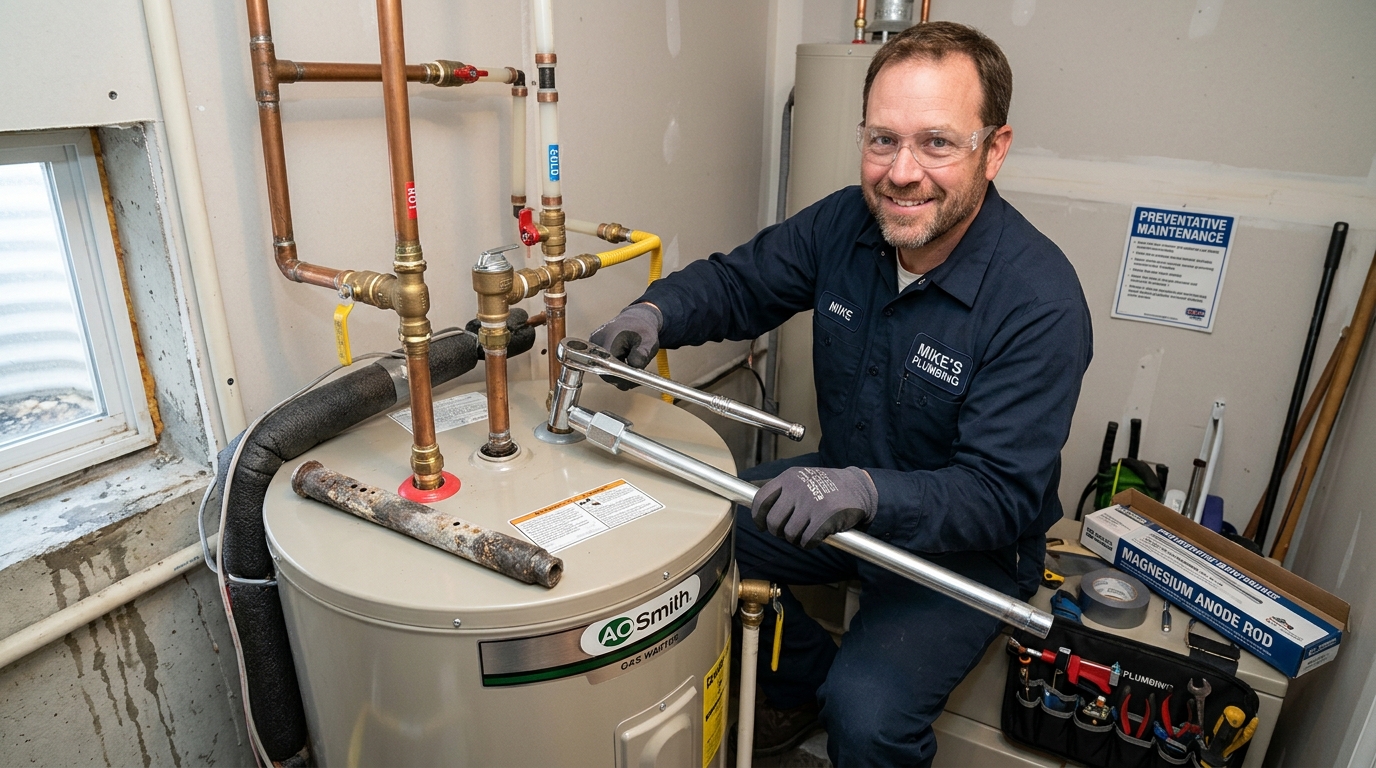
Replacing a residential water heater is one of the most substantial unexpected expenses a homeowner can face. While the average water heater across Southern California lasts only 8 to 10 years before internal rust or element failure forces a replacement, taking proactive, systematic care of your system can easily extend its operating life to 12, 14, or even 16+ years.
In San Bernardino County—where groundwater contains extreme mineral hardness (measuring between 14 and 20+ grains per gallon) and municipal water pressure often surges past 90 PSI—water heaters endure far more mechanical abuse than in other parts of the country.
In this actionable guide, the California C-36 licensed plumbers at Colton Water Heater Experts outline the top proven maintenance practices that prevent premature tank failure, lower monthly energy bills, and keep hot water flowing dependably in your home.
1. Calibrate Your Thermostat to the Optimal 120°F Setpoint
Many brand-new water heaters arrive from the factory preset to 140°F (60°C). While hot water is essential, operating your tank at this elevated temperature accelerates wear on several fronts:
- Accelerated Mineral Scale Precipitation: Calcium carbonate and magnesium ions in hard water precipitate out of solution exponentially faster at temperatures exceeding 125°F. Keeping the thermostat calibrated at 120°F (49°C) substantially slows the rate at which calcified scale bakes onto the bottom of the cylinder.
- Elimination of Scald Hazards: Water at 140°F can inflict third-degree scald burns on young children or elderly family members in less than 5 seconds. At 120°F, it takes more than 5 minutes of continuous exposure to cause burns, providing a critical margin of safety.
- 5% to 10% Lower Monthly Energy Bills: For every 10°F reduction in water temperature, you reduce standby heat loss through the tank jacket by roughly 3% to 5%, saving money on your monthly gas or electric utility bill.
2. Inspect & Replace the Sacrificial Anode Rod Every 3 Years
Inside every storage water heater sits an unsung hero: the sacrificial anode rod. This hexagonal-head steel rod is wrapped in magnesium or aluminum and suspended vertically in the center of the tank.
Because magnesium and aluminum have a higher galvanic potential than steel, corrosive ions in the water attack the anode rod first through natural electrolysis. As long as the sacrificial metal remains intact, the inner steel cylinder is shielded from corrosion.
However, in the conductive, mineral-dense water common across Colton, Grand Terrace, and Rialto, anode rods are consumed rapidly:
- Within 24 to 36 months, an anode rod can be completely eaten away, leaving only a thin core wire.
- Once the sacrificial metal is depleted, corrosive water immediately attacks microscopic vulnerabilities in the tank's porcelain glass lining.
- Pinhole leaks develop shortly after, turning what could have been a $200 maintenance replacement into a full $1,800 emergency tank replacement.
Have your anode rod checked during your annual tune-up. If more than 75% of the rod is eroded or the core steel wire is visible, replace it immediately. For homes with sulfur or rotten-egg water odors, an aluminum-zinc alloy rod or a permanent powered titanium anode rod eliminates the odor while delivering superior corrosion resistance.
3. Perform a Pressurized Sediment Flush Annually
In San Bernardino County, an unserviced 50-gallon water heater can accumulate 20 to 40 pounds of loose calcium sand and calcified rock flakes at the base of the cylinder over just a few years. This sediment bed insulates the burner flame from the water, causing:
- Burner flames to fire up to 40% longer to heat the same volume of water
- Extreme overheating of the curved bottom head, causing metal fatigue and cracking the protective glass coating
- Loud popping, rumbling, and kettling noises as trapped water boil-flashes into steam pockets
While gravity draining with a garden hose trickles out some loose debris, a professional pressurized maintenance flush uses incoming municipal water turbulence and specialized agitation wands to thoroughly scour the bottom of the cylinder, flushing sediment gravel out through the drain valve until the discharge runs crystal clear.
4. Regulate Household Water Pressure Below 75 PSI
High water pressure is a silent killer of residential water heaters. Municipal water pumping stations across hillside areas in Grand Terrace and foothills in Loma Linda frequently maintain street mainline pressures exceeding 90 to 110 PSI to reach elevated properties.
Continuous high pressure:
- Stretches welded tank seams during every thermal expansion cycle, fracturing internal glass linings
- Forces the safety Temperature & Pressure (T&P) relief valve to weep continuously, flooding utility closets
- Blows out flexible stainless steel supply connectors and washing machine hoses
Under California Plumbing Code, household static water pressure must never exceed 80 PSI. We recommend testing your pressure using a screw-on hose bib gauge. If the reading exceeds 75 PSI, install or replace your household Pressure Reducing Valve (PRV) immediately.
5. Verify Your Thermal Expansion Tank Pre-Charge
Whenever a pressure reducing valve or water meter check valve is installed, your plumbing system becomes a "closed loop." As heated water expands, it cannot push backward into the city main. Without a functioning thermal expansion tank, internal water pressure can spike to 120–150 PSI every time the heater fires up.
Thermal expansion tanks feature an internal butyl rubber bladder pre-charged with air. Once a year:
- Shut off the main water supply and relieve household water pressure at a nearby faucet.
- Use a digital tire pressure gauge on the Schrader valve on top of the expansion tank.
- Confirm the air pressure matches your incoming water pressure (typically 55–60 PSI). If water spurts from the air valve, the internal bladder has ruptured and the expansion tank must be replaced.
6. Annually Test the Temperature & Pressure (T&P) Relief Valve
The T&P relief valve is the primary safety device preventing catastrophic water heater boiler explosions. Designed to open if internal temperature exceeds 210°F or pressure reaches 150 PSI, this mechanical valve can seize shut if mineral scale encrusts the internal brass seat.
Once a year, gently lift the test lever halfway. You should hear a vigorous rush of hot water discharge into the drain pipe. Release the lever; it should snap shut cleanly. If no water flows, or if the valve continues to drip after snapping shut, mineral scale has compromised the seal and the valve requires immediate professional replacement.
7. Maintain 24 Inches of Clear Airspace Around the Base
In many Colton garages and laundry alcoves, water heaters end up surrounded by stacked storage boxes, paint cans, laundry detergents, and lawn care equipment. Gas water heaters require unrestricted airflow around the base for complete, clean combustion.
Furthermore, storing flammable liquids, solvents, or aerosol cans near a water heater creates severe fire hazards. Flammable vapors travel along the floor and can be drawn into the burner chamber, triggering flash fires. Keep a minimum perimeter of 24 inches of clear, unobstructed space around your water heater at all times.
Professional Maintenance Makes the Difference
Implementing these preventative strategies will safeguard your water heater against San Bernardino County's aggressive mineral water and prolong its operating life by years. If you would prefer a comprehensive professional tune-up, contact Colton Water Heater Experts at (909) 588-3482 to schedule our certified multi-point safety inspection and pressurized flush today.